HRV isn't a readiness score. It's a question.
Wearables distill heart rate variability into a traffic-light number. That's not what it is. HRV is a noisy signal that asks you questions — and the answer depends on knowing yourself.
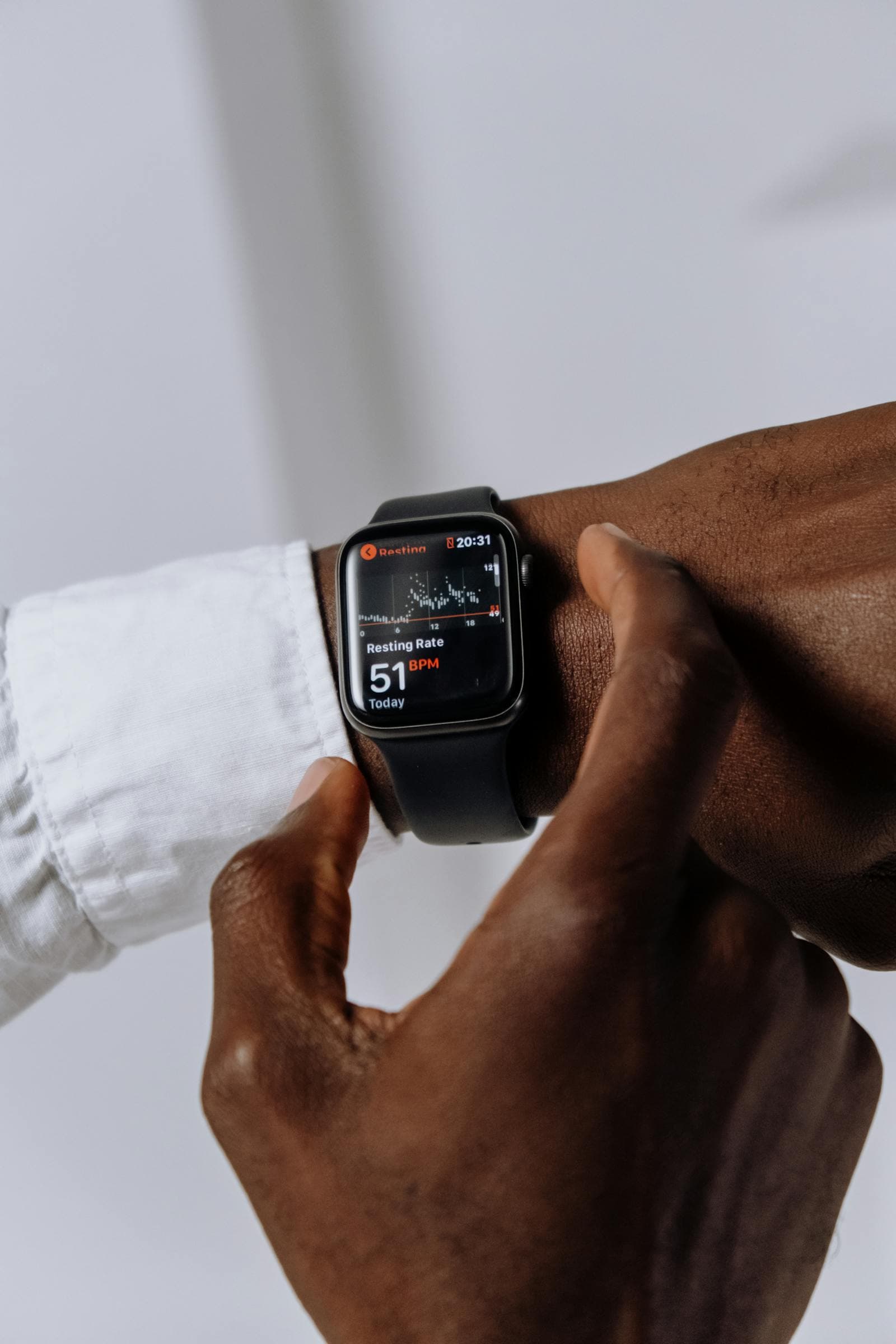
Most fitness wearables will give you a morning HRV number and a colored ring: green, yellow, red. The implicit message is "train hard," "train easy," or "rest." It's tidy. It's also mostly wrong.
HRV is the variation in time between consecutive heartbeats, measured in milliseconds. Higher variability generally means your parasympathetic nervous system is in control — you're recovered. Lower means your sympathetic system is running things — you're stressed, under-recovered, fighting something, or about to be.
That's the useful part. The unhelpful part is the readiness score.
The noise problem
HRV is noisy in a way that matters. A single night's reading can swing 20% from measurement error alone: breathing rate, body position, ambient temperature, when you ate last, hydration, the time you woke up. Before you extract any signal about your training, you have to subtract all that noise.
Most scores don't. They treat last night's number as fact, compare it to a rolling baseline, and hand you a color.
So the number goes red because you ate late and slept with the window open. You're told to skip your session. You skip it. Two days later the number is green and you've lost a key workout for no real reason.
What HRV actually tells you
Think of HRV as one data source among several, not the answer. A useful reading combines:
- Your HRV trend over 7 days, not yesterday's value. A multi-day drop means something.
- Your subjective readiness — how do you feel when you get out of bed, before you check the app?
- Your workload context — did you do a hard session 48 hours ago? Is an event approaching?
- Your life context — bad sleep, travel, a stressful week, being sick.
When three of those point the same direction, that's signal. When one of them does, that's noise.
How to actually use it
Here's the practical version. Every morning, before looking at the number, ask yourself: "Do I feel ready to train hard today?" Write down a 1–5. Then look at the HRV reading.
- Both say green: train as planned.
- Both say red: the data agrees with the body. Trust it. Back off or move the session.
- They disagree: that's the interesting case. A big HRV drop but you feel fine? Probably noise — train normally and note what happened. You feel wrecked but HRV is green? Probably life stress masking as recovery, or early illness. Respect the body.
The number you want to track over months isn't your HRV baseline. It's how often your gut and your HRV agree. When they align, the device is earning its keep. When they chronically disagree, stop paying attention to the device.
The real point
A good training system doesn't hand you a verdict; it gives you information you can reason about. HRV is useful the moment you stop treating it as the judge and start treating it as a witness — one voice in a panel that includes sleep, soreness, session RPE, and how your espresso tastes this morning.
The question HRV is asking is always the same: "Something might be off today. Is it?" Your job is to answer honestly, using everything you know. The wearable can't do that for you.