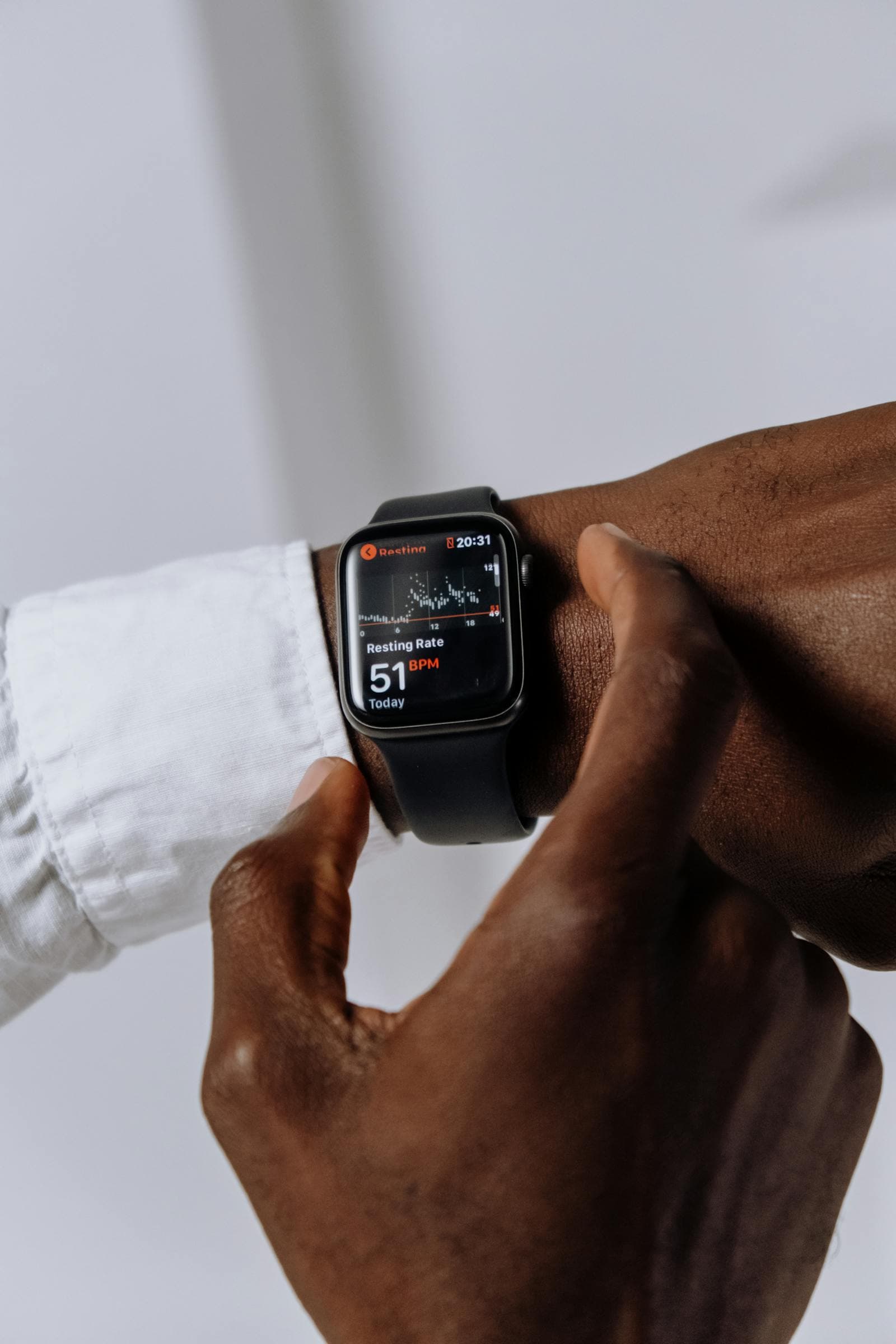
Zone 2 is simple. You're probably still doing it wrong.
Zone 2 became a fitness buzzword and now everyone thinks they're doing it. Most self-directed runners drift into tempo pace. Real Z2 is uncomfortable because it's boring, not because it's hard.
Zone 2 is having a moment. Every podcast mentions it, every wearable labels it, half the runners on Strava post weekly "Z2 base" runs. And most of those runs aren't Zone 2.
That's not a gotcha. It's a known pattern: give a self-directed athlete a low-intensity prescription and they'll drift upward by 10–15 bpm within the first mile, because low intensity feels slow and slow feels like they're not "really training." They end up in Zone 3 — too hard to be aerobic base, too easy to be threshold work. The middle lane that builds nothing in particular, very efficiently.
What Zone 2 actually is
The cleanest definition: the highest intensity at which you're still primarily burning fat and producing minimal lactate — below your first ventilatory threshold (VT1). Physiologically, it's where mitochondrial adaptation happens most efficiently per unit of stress.
Practical heuristics, roughly in order of reliability:
- Lactate test: ~2.0 mmol/L in a lab. The gold standard, annoying to access.
- Ventilatory threshold: the last intensity where you can still breathe through your nose comfortably, or speak full sentences without gasping.
- Heart rate: commonly 60–70% of max HR, or 65–75% of HR reserve. Rough — your max HR estimate is probably wrong.
- RPE: 3–4 out of 10. "I could keep this up for hours, and I'm bored."
If you can maintain a conversation in full sentences without your breathing pattern giving you away, you're probably in Z2. If you can only manage 4–6 words between breaths, you've drifted into Z3 — which is what most "Z2 runs" actually are.
Why the drift happens
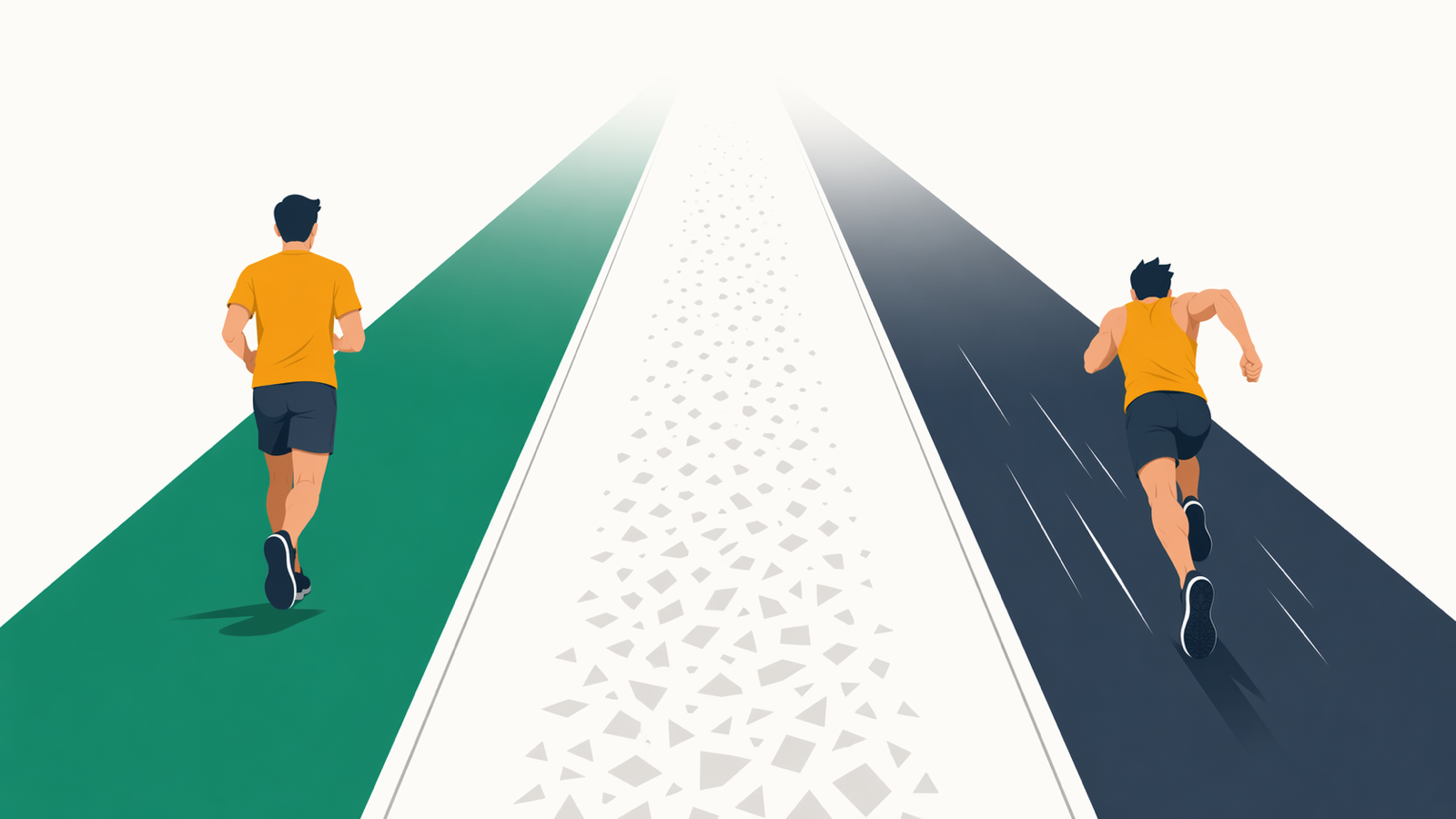
Two reasons. First: Zone 2 heart rate often sits at a pace that feels embarrassingly slow. For a runner whose 5K pace is 5:00/km, true Z2 might be 6:30–7:00/km. That's a walk-jog for them on anything flat. Their ego creeps the pace up.
Second: heart rate lags. You start at the right pace, HR takes 5–8 minutes to catch up, and by the time you're reading "Zone 2" on the watch, you've actually been in Zone 3 for the first 2 km. Cardiac drift over an hour adds another 5–10 bpm at steady effort, pushing you further up.
The fix isn't more discipline. It's accepting that Z2 is slow. Painfully, boringly slow. That's the point — you should be able to do 90 minutes of it without being destroyed, because the stress on any single system is low.
The 80/20 distribution
The research that popularized Zone 2 (Seiler, Laursen) isn't really about Z2 itself — it's about the distribution of training. Elite endurance athletes across multiple sports spend roughly 80% of total training time at low intensity (Z1–Z2) and 20% at high intensity (Z4–Z5). The middle lane, Z3, they mostly avoid.
The pyramid reason: the low volume builds the aerobic engine without accumulating damage. The hard intensity develops lactate clearance and VO2max. The middle intensity is expensive — it costs almost as much recovery as hard work, while contributing less to either adaptation.
So "Zone 2" isn't just about one specific intensity. It's the structural claim that most of your training should be very easy, freeing the 20% that's hard to actually be hard.
What this means in practice
If you run 5 times a week:
- 4 of those runs should feel boringly easy — conversational, HR stays in the lower half of your range, pace slow enough to feel slightly absurd.
- 1–2 should be actually hard — intervals, a threshold run, a hilly fartlek. Genuinely uncomfortable.
- None should be moderately uncomfortable for the whole run. That's the middle lane that builds fatigue without adaptation.
The biggest unlock for most amateur runners isn't more hard workouts. It's slowing the easy runs down until they're genuinely easy — and then leaving them there, for months, while the aerobic base quietly builds underneath.
Yes, it'll feel like nothing is happening. That's how it's supposed to feel.